

Some commercial spaces need more cooling power than a standard HVAC system can reasonably provide. When a building has multiple zones, a large number of occupants, and lots of heavy equipment, the cooling system has to do much more than just keep the air comfortable. It also needs to remain dependable and help the facility stay efficient throughout the day.
Larger commercial spaces need a way to manage those heavy-duty cooling demands. And that’s exactly what a chiller system is engineered to do. In fact, chillers are a fundamental feature of most commercial HVAC systems because they’re centralized, highly efficient, and scalable.
When you keep your building’s HVAC equipment well-maintained with professional chiller service, the benefits are far-reaching for your property’s long-term value. Here’s why.
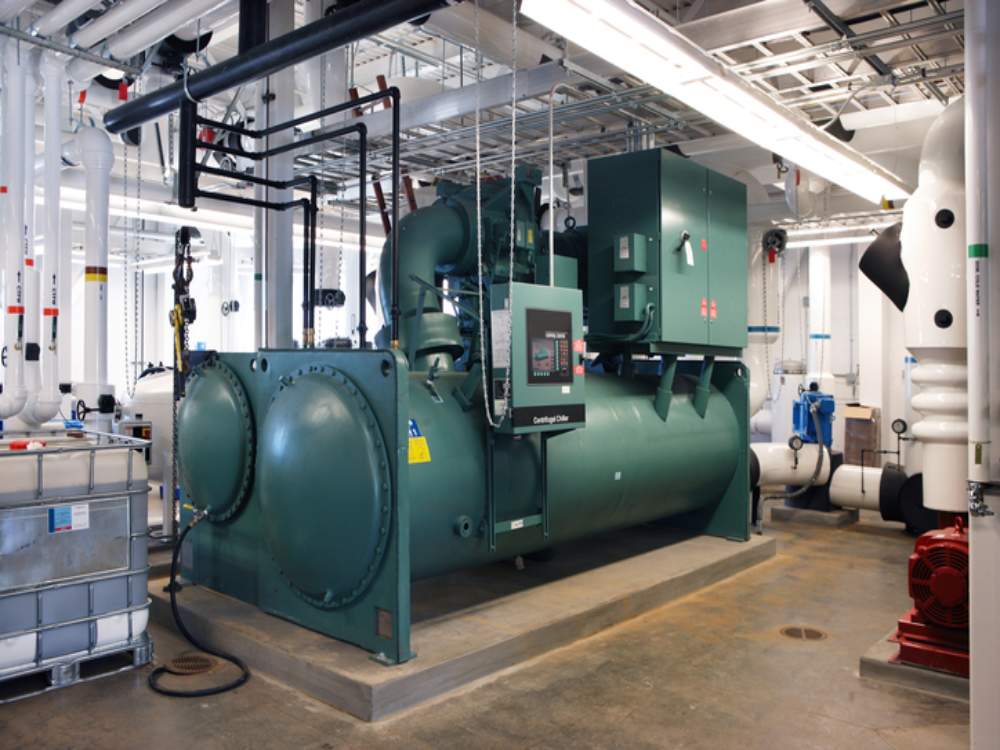
How Chiller Systems Work
First and foremost, how do commercial chiller systems work? A chiller removes heat from water or a water-glycol solution, then sends that chilled liquid through the building to air handlers, fan coils, or process equipment. Instead of producing cooling at several separate points, the system creates chilled water from a central source and distributes it where the building needs it.
That centralized design is a major reason chillers are so integral to larger properties. They give the facility a more organized way to manage cooling across multiple zones, floors, or otherwise high-demand areas.
The Benefits for Commercial Buildings
The value of commercial HVAC chiller systems comes from how well they serve buildings where cooling demand is too broad, too constant, or too complex for smaller equipment. When the system is properly designed and maintained, the benefits can reach several parts of the facility:
- Centralized Cooling Control – A chiller can serve several areas from one central cooling source, giving the building more consistent temperature management.
- Reliable Occupant Comfort – Chilled water distribution helps maintain more stable indoor conditions across offices, work areas, lobbies, and shared spaces.
- Equipment Protection – Chillers can support areas where machinery, servers, or production equipment need dependable cooling to avoid excess heat.
- Load Management – Modern chiller systems can respond to changing cooling demand instead of forcing equipment to operate at one fixed output.
- Long-Term Flexibility – Scalable cooling capacity can help a property adapt as building use, occupancy, or equipment needs change.
Applications in Large Facilities
An industrial chiller system often proves its value in facilities where the cooling needs are tied to more than just keeping occupants comfortable. Manufacturing plants may need cooling control for production areas where equipment creates heat throughout the day. Warehouses and industrial spaces may need consistent temperature control across wide footprints. Office buildings, hotels, healthcare facilities, data centers, and retail centers may also rely on chillers to serve different areas with different cooling demands.
The point isn’t that every large building needs the same chiller configuration. The value comes from matching the system to how the facility actually operates.
Cost Efficiency and ROI
Chiller systems are HVAC workhorses that can add an abundance of long-term value, especially when they give a facility better control over cooling output, maintenance planning, and future capacity needs. A properly matched system can reduce wasted operation by responding more closely to the building’s actual cooling load. Plus, advanced controls, variable-speed components, and strong maintenance practices can also help the equipment operate with more consistency over time.
There are also benefits of modular chiller systems for expanding businesses because the added capacity can be strategized in stages. That can be useful when a property expects new tenants, new equipment loads, or future building changes.
Maintenance Requirements
The function of a chiller in an HVAC system relies on several components doing their jobs correctly. Chillers consist of compressors, pumps, controls, and electrical connections, along with heat-transfer surfaces, refrigerant levels, and moving components to take into account. And they all influence how well the system performs. If one part starts falling behind, the chiller will likely lose efficiency, struggle to meet a building’s massive demand, or require repairs that inadvertently affect the entire building.
Professional maintenance should include performance evaluations, compressor and refrigerant diagnostics, electrical safety inspections, cleaning, lubrication, and a clear review of any developing service concerns. For equipment this important, maintenance is how the system keeps earning its place in the facility.
Service Your Chiller With Triangle Environmental
A chiller system can become one of the most valuable pieces of HVAC equipment in a commercial building, but only when it’s inspected, repaired, and maintained with the level of care that equipment requires. Here at Triangle Environmental, we take immense pride in providing commercial and industrial chiller repair and maintenance solutions to Chicagoland Area facilities of any industry. Our team specializes in servicing centrifugal chillers, reciprocating chillers, process chillers, and water- and air-cooled chillers.
If your building relies on a chiller system, don’t wait for cooling problems to affect your people, your equipment, or your operations. Contact us today to schedule professional chiller service with our experienced HVAC specialists.
Chiller Systems – Frequently Asked Questions
What Is a Chiller in an HVAC System?
A chiller is a device that removes heat from water or a water-based solution. That chilled liquid then circulates through the building to help cool air handlers, occupied spaces, process equipment, or high-demand areas.
Why Do Commercial Buildings Use Chillers?
Commercial buildings use chillers when they need stronger, more centralized cooling than smaller HVAC equipment can provide. Chillers are especially useful in larger properties with multiple zones, heavy occupancy, equipment heat, or cooling demands that change throughout the day.
How Often Should Chillers Be Serviced?
Chillers should be serviced routinely because they rely on many components to handle heavy-duty cooling loads. A professional maintenance schedule can help protect cooling performance, reduce unnecessary strain, and catch developing issues before they disrupt the facility.