

Reliable cooling starts with a healthy HVAC system, and refrigerant keeps commercial equipment operating. When a leak develops, cooling performance can drop, energy use can rise, and indoor comfort can be harder to maintain. Understanding what causes refrigerant loss helps facility managers and business owners protect their equipment and schedule service at the right time. Triangle Environmental helps businesses address every commercial HVAC refrigerant leak throughout DuPage County, Kane County, Kendall County, and Will County, IL. Explore the most common causes of refrigerant leaks and how professional service can help maintain long-term system reliability.
What Does Refrigerant Do in a Commercial HVAC System
Refrigerant is a vital part of a commercial HVAC system because it removes heat from the building to maintain consistent indoor cooling. As refrigerant moves through the system, it absorbs heat from indoor air and carries it to the outdoor unit, where that heat is released. This continuous process helps maintain comfortable temperatures throughout offices, retail stores, and other commercial facilities. Proper refrigerant levels allow HVAC equipment to operate efficiently, deliver steady cooling performance, and support the long-term reliability of important system components.
Why Refrigerant Leaks Are a Problem for Commercial HVAC Systems
Leaks can pose significant challenges for commercial HVAC equipment because the system relies on an appropriate refrigerant charge to remove heat. A commercial AC refrigerant leak often leads to longer run times, uneven temperatures, and reduced cooling performance throughout the facility. Equipment may use more energy as it works to meet cooling demands, which can affect operating costs over time. Fast attention to these issues helps preserve efficiency, support occupant comfort, and maintain dependable performance for all commercial properties.
Common Causes of Commercial HVAC Refrigerant Leaks
Several factors can contribute to refrigerant loss in commercial cooling equipment. Understanding common HVAC refrigerant leak causes can help facility managers identify problems early and keep the systems working. Many leaks develop gradually, making routine inspections an important part of long-term equipment care. The following are some of the most common sources of refrigerant leaks:
- Corrosion on Refrigerant Lines and Coils: Exposure to moisture, chemicals, and environmental conditions can gradually wear away metal components over time. Small openings may develop in refrigerant lines or coils, allowing refrigerant to escape from the system.
- Vibration and Equipment Movement: Commercial HVAC systems generate vibration during normal operation. Continuous movement can loosen connections and place stress on refrigerant lines, creating opportunities for leaks.
- Worn Seals and Connections: Gaskets, valves, and fittings experience normal wear as equipment ages. These components can lose their tight seal, allowing refrigerant to leak from connection points.
- Physical Damage to Components – Refrigerant lines and coils can sustain damage during building renovations, maintenance activities, or accidental impacts. Even minor damage may create openings that affect refrigerant containment and system performance.
Signs Your Commercial HVAC System Has a Refrigerant Leak
Many leaks develop gradually, which makes early identification important for protecting system performance. Paying attention to common warning signs can help facility managers schedule service before cooling issues affect daily operations. Professional refrigerant leak detection allows technicians to pinpoint the source of a leak and recommend the appropriate solution. Here are the signs that often indicate that refrigerant may be escaping:
- Reduced Cooling Performance: Indoor spaces may feel warmer than normal even when the system is running normally. The equipment can struggle to maintain the temperature settings needed for occupant comfort.
- Longer System Run Times: A refrigerant leak can make the HVAC system operate for longer periods to reach the desired temperature. Extended run times may increase wear on important cooling components.
- Higher Energy Bills: Commercial equipment often consumes more energy when refrigerant levels are low. Increased utility costs may signal that the system is working harder than needed.
- Ice Formation on Coils – Refrigerant shortages can affect normal temperature and pressure conditions within the system. Ice may develop on evaporator coils or nearby components as a result.
- Hissing or Bubbling Sounds: Escaping refrigerant can sometimes create unusual noises near refrigerant lines or connections. Hissing or bubbling sounds are often signs that a qualified technician should inspect a leak.
How HVAC Professionals Detect Refrigerant Leaks
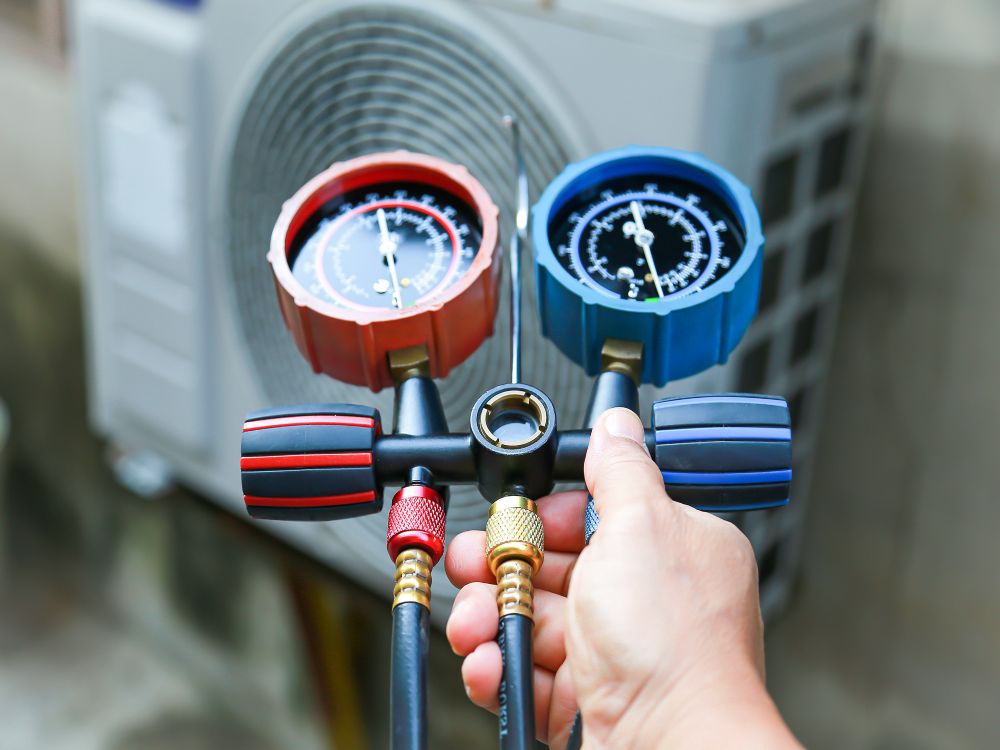
Accurate refrigerant leak detection requires specialized equipment and trained technicians who understand commercial HVAC systems. During an inspection, professionals evaluate system performance, measure refrigerant pressures, and look for signs that levels have dropped below normal operating ranges. Electrical leak detectors can identify small refrigerant leaks with precision, while ultraviolet dye testing can help confirm the leak’s location. The technician also inspects refrigerant lines, coils, valves, and fittings for wear or damage. Once the source of the leak is found, the appropriate repair can be made to restore cooling, improve system reliability, and support long-term performance.
What Happens If a Refrigerant Leak Is Not Repaired
Ignoring a leak can lead to reduced cooling capacity, longer operating cycles, and increased stress on commercial HVAC equipment. As refrigerant levels continue to drop, the system may struggle to maintain consistent temperatures throughout the facility. Timely HVAC refrigerant repair helps restore proper performance and improve energy efficiency. Preventing commercial refrigerant leaks starts with routine maintenance, regular inspections, and prompt replacement of worn components.
Reach Out for HVAC Refrigerant Repair
A commercial HVAC refrigerant leak can reduce cooling efficiency, increase energy consumption, and place added strain on important system components. Addressing refrigerant issues early helps ensure dependable performance, stable indoor temperatures, and long-term reliability and quality. Triangle Environmental has provided commercial HVAC and refrigeration services throughout the Chicagoland area since 1983. Seasoned technicians often provide leak detection, repairs, and preventive maintenance solutions designed to keep the cooling system operating efficiently. Contact our team today to schedule service and help protect the performance of your commercial HVAC equipment year-round.
Commercial HVAC Refrigerant Leak FAQs
What Causes Refrigerant Leaks in Commercial HVAC Systems?
Common causes include corrosion on coils and refrigerant lines, worn seals and fittings, vibration that loosens connections, physical damage to system components, and normal wear that occurs as equipment ages.
Can a Refrigerant Leak Be Repaired?
Yes, a refrigerant leak can often be repaired by a qualified HVAC technician. The repair process typically involves locating the source of the leak, repairing or replacing the affected component, and verifying that the system can hold the proper refrigerant charge. Once repairs are complete, the system can be restored to normal operating conditions to support efficient and dependable cooling.
How Are Commercial HVAC Refrigerant Leaks Detected?
Commercial HVAC refrigerant leaks are detected using specialized tools and diagnostic methods, such as electronic leak detectors, ultraviolet dye testing, or soap bubble solutions, to pinpoint the exact location of a leak.