
Discover Our Rooftop Unit Maintenance Checklist
Commercial rooftop units help maintain comfortable indoor temperatures, proper airflow, and healthy indoor air quality in office buildings, retail spaces, warehouses, and other facilities. Regular rooftop unit maintenance supports efficient operation, consistent performance, and long-term equipment reliability. Businesses throughout DuPage County, Kane County, Kendall County, and Will County trust Triangle Environmental for professional HVAC service and maintenance solutions. Our commercial rooftop unit maintenance checklist highlights essential inspection and service tasks that help facility managers keep rooftop HVAC equipment operating efficiently throughout every season.
Why Regular Rooftop Unit Maintenance Matters
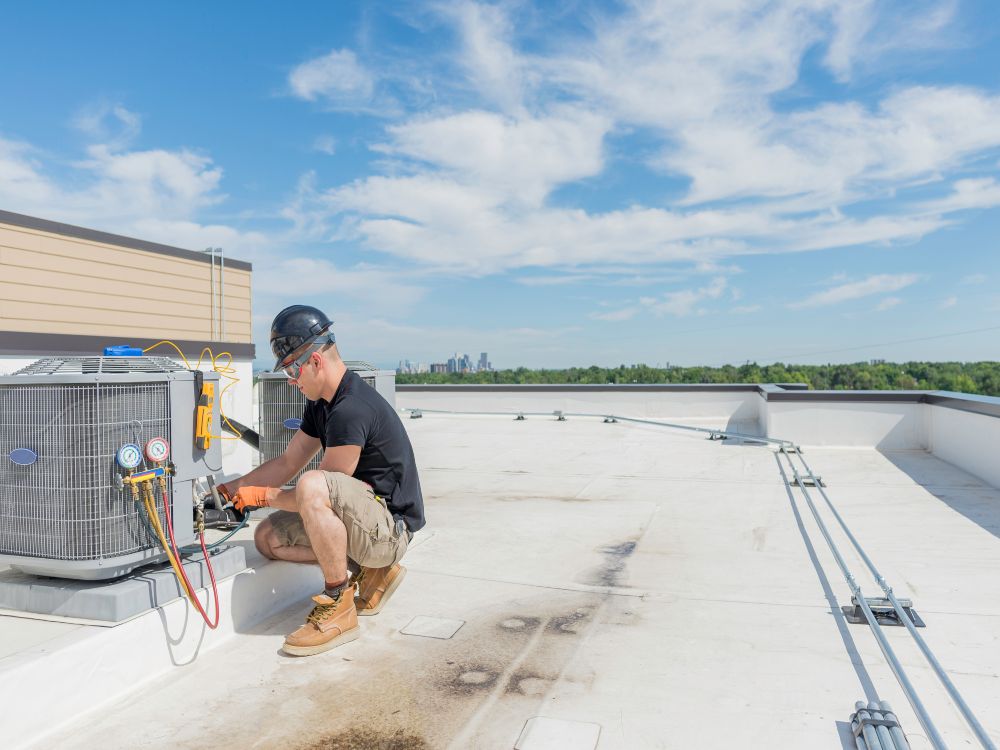
Regular commercial rooftop HVAC maintenance helps facility managers keep heating and cooling systems operating efficiently throughout the year. Routine service allows technicians to inspect critical components, verify proper airflow, clean equipment, and identify wear before it affects performance. A well-maintained rooftop unit can support more consistent indoor comfort, improve energy efficiency, and contribute to longer equipment life. Scheduled maintenance also helps businesses plan service needs more effectively, supporting reliable HVAC operation for employees, customers, and daily building activities.
What to Include in Your Rooftop Unit Maintenance Checklist
A thorough RTU maintenance checklist helps facility managers stay organized and ensure critical HVAC components receive proper attention throughout the year. Regular inspections can support system efficiency, indoor comfort, and dependable operation. Reviewing key mechanical, electrical, and refrigeration components provides a clear picture of equipment condition and helps maintain consistent performance. Below is an overview of what to include in your rooftop unit maintenance checklist:
- Inspect Filters, Coils, and Airflow Components: Air filters should remain clean and free of excessive debris to support proper airflow throughout the building. Evaporator and condenser coils, fans, belts, and dampers should also be inspected to ensure the unit operates properly.
- Check Electrical and Mechanical Components: Electrical connections should be examined for secure operation and signs of wear. Technicians should also inspect motors, bearings, pulleys, and other mechanical parts to verify proper performance.
- Inspect Refrigeration and Condensate Components: Refrigerant components should be checked to confirm the system is operating within manufacturer specifications. Condensate drain lines and drain pans should remain clean and clear to support reliable moisture removal.
Recommended Seasonal Rooftop Unit Maintenance Tasks
A seasonal rooftop unit inspection helps facility managers prepare HVAC equipment for changing weather conditions and building demands. Different times of the year impose varying workloads on commercial systems, making routine inspections an important part of maintaining efficiency and performance. Here, we provide a few recommended seasonal rooftop unit maintenance tasks:
- Spring Cooling System Preparation: The technician should inspect condenser coils and verify proper refrigerant system operation before warmer temperatures arrive. Cooling components should be tested to confirm the unit can maintain comfortable indoor conditions during periods of heavy use.
- Summer Performance Checks: Airflow components should be evaluated to support efficient system operation throughout peak cooling season. The service technician should review operating conditions and address worn parts that may affect performance.
- Fall Heating System Inspection: Heating components should be examined and tested before cooler weather begins. Electrical connections, controls, and safety devices should be checked to support dependable heating performance.
- Winter Equipment Evaluation: Technicians should inspect rooftop equipment for weather-related wear and verify that all system components remain in good condition. Drainage pathways and exterior panels should be reviewed to help protect the unit throughout the season.
When Facility Managers Should Call an HVAC Professional
Facility managers should contact an HVAC professional when a rooftop unit experiences airflow issues, uneven temperatures, unusual noises, higher utility costs, or frequent cycling. These signs can indicate components that need attention to maintain reliable performance. Professional technicians can inspect system operation, evaluate equipment condition, and identify opportunities to improve efficiency. Scheduled service is also beneficial before peak heating and cooling seasons, helping support dependable operation, occupant comfort, and performance.
Be Prepared for Your Rooftop HVAC Repairs
Consistent rooftop unit maintenance helps facility managers support efficient HVAC performance, reliable indoor comfort, and equipment value. Regular inspections and preventive service can help identify wear, improve system efficiency, and keep critical components operating as intended. Triangle Environmental has served commercial properties throughout the Chicagoland area, providing expert maintenance, repair, and replacement solutions. Businesses across DuPage County, Kane County, Kendall County, and Will County can count on seasoned technicians for dependable HVAC service. Schedule your professional rooftop unit maintenance visit today.
Rooftop Unit Maintenance Checklist FAQs
How Often Should Commercial Rooftop Units Be Serviced?
Commercial rooftop units should typically receive professional service at least twice per year, with inspections scheduled before the primary heating and cooling seasons.
What Should Be Included in Rooftop Unit Maintenance?
Rooftop unit maintenance should include inspections of air filters, coils, belts, fans, electrical connections, motors, refrigerant components, and condensate drainage systems. Technicians should also test controls, verify airflow, check operating performance, and examine the overall condition of the equipment.
How Often Should Rooftop Unit Filters Be Changed?
Rooftop unit filters should generally be inspected monthly and replaced according to system requirements, building conditions, and manufacturer recommendations.